

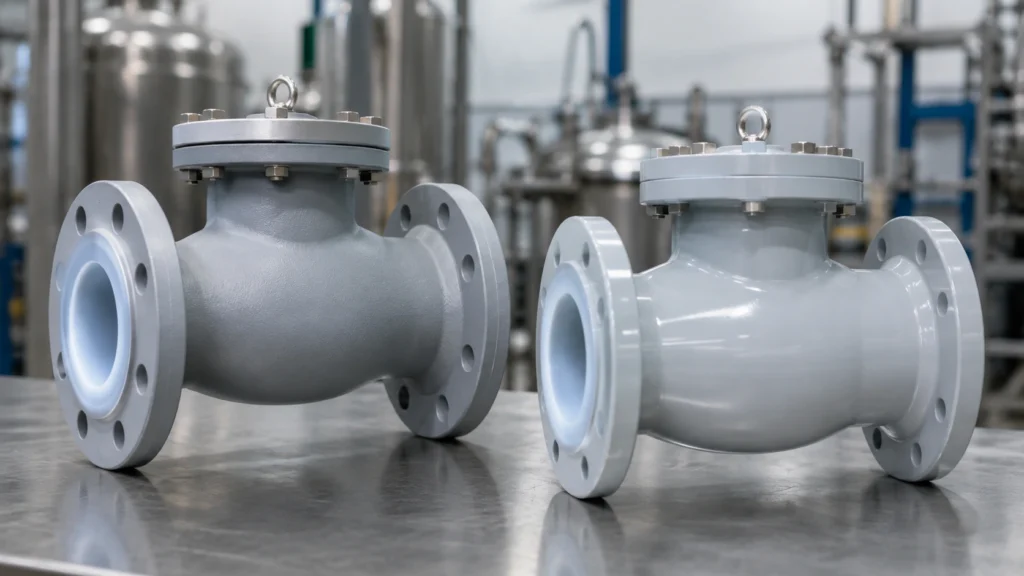
PFA vs. PTFE Coatings: Selecting the Right Material for Your Needs
When selecting a fluoropolymer coating for an industrial application, PFA and PTFE are two of the most widely recognized options. Both offer strong chemical resistance, high-temperature performance, electrical insulation, and low-friction properties. However, they are not interchangeable. Differences in film thickness, processability, surface characteristics, and resistance to chemical permeation can make one material a much better fit for a specific application.
Understanding the differences between PFA and PTFE coatings can help manufacturers choose a coating that delivers the right combination of performance, durability, and cost efficiency. Below, we break down how these two fluoropolymer coatings compare and the factors to consider when selecting the right material for your needs.
What Are PTFE Coatings?
PTFE, or polytetrafluoroethylene, is a well-established fluoropolymer known for its exceptionally low coefficient of friction, chemical inertness, and ability to perform across a broad temperature range. PTFE coatings are frequently selected when non-stick performance, easy release, or low friction is a primary requirement.
PTFE can continuously operate at temperatures of approximately 260°C (500°F), while also maintaining flexibility at very low temperatures. Its strong carbon-fluorine bonds provide resistance to aggressive chemicals, including many acids and solvents. These characteristics make PTFE useful for applications such as food processing and packaging equipment, chemical processing components, seals, electrical insulation, and other industrial parts where reliable release and chemical resistance are important.
One important limitation is processability. PTFE does not flow in a conventional molten state and therefore cannot be melt processed in the same way as many thermoplastics. As a material, it is typically compression molded, ram extruded, or sintered. For coating applications, PTFE systems generally produce thinner films than PFA systems.
What Are PFA Coatings?
PFA, or perfluoroalkoxy, is also a fully fluorinated polymer and shares many of PTFE’s core performance characteristics. Like PTFE, PFA can continuously operate at temperatures around 260°C (500°F) and provides excellent chemical resistance. The major distinction is that PFA is melt-processable.
This processability makes PFA particularly useful when thicker, more continuous coating films are required. PFA coatings can provide a strong barrier against chemical permeation, which is valuable for equipment exposed to acids, solvents, caustics, and other aggressive substances. PFA is commonly associated with chemical processing, pharmaceutical, semiconductor, high-purity fluid handling, and other demanding environments.
PFA also offers improved creep resistance compared with PTFE and can provide a smoother surface. These characteristics can make it advantageous when long-term dimensional stability, cleanliness, or a more continuous protective barrier is a priority.
PFA vs. PTFE Coatings: Key Differences
Although the two materials have many similarities, the best choice often comes down to what the coated component needs to accomplish.
Chemical Resistance
Both PFA and PTFE provide excellent chemical resistance. PTFE is highly inert and can withstand exposure to a wide range of aggressive chemicals. PFA offers similarly strong chemical resistance while providing a more effective permeation barrier in coating applications. For components facing ongoing exposure to aggressive acids, solvents, or caustics, the thicker and more continuous film achievable with PFA can make it the preferred option.
Temperature Performance
Temperature resistance alone may not determine the choice between PFA and PTFE. Both can provide continuous service at approximately 260°C (500°F). The complete operating environment, including chemicals, mechanical demands, and required film thickness, should therefore be considered alongside temperature.
Film Thickness and Barrier Protection
Film build is one of the clearest differences between PFA and PTFE coating systems. PTFE coatings are typically applied in thinner films, while PFA can be built to substantially greater thicknesses. A thicker PFA coating can create a more continuous barrier, improving protection where chemical permeation or long-term exposure is a concern.
Friction and Non-Stick Performance
PTFE is particularly well known for its extremely low coefficient of friction. That makes it a strong choice for applications where release properties, reduced sticking, and low friction are the primary goals. PFA also offers low-friction performance, but PTFE generally has the advantage when minimizing friction is the central requirement.
Processability and Surface Finish
PFA’s ability to be melt processed differentiates it from PTFE as a base material and contributes to its versatility. It can be extruded, injection molded, thermoformed, and welded, while PTFE requires different processing methods. PFA can also achieve smoother, glossier surfaces, which can be beneficial in high-purity or hygienic environments.
Cost Considerations
PFA generally carries a higher upfront cost than PTFE. That does not necessarily make PTFE the more economical choice for every application. If PTFE already meets the application’s technical requirements, it can provide a cost-effective solution. In an aggressive chemical environment that requires the thicker barrier protection associated with PFA, however, selecting PTFE simply to lower initial costs may increase the risk of premature coating failure, rework, and downtime.
How to Choose Between PFA and PTFE
The right fluoropolymer coating depends on the conditions the component will face and the performance characteristics that matter most.
| Consideration | PTFE | PFA |
| Continuous service temperature | Approx. 260°C | Approx. 260°C |
| Chemical resistance | Excellent | Excellent; stronger permeation barrier in coating applications |
| Friction | Exceptionally low | Very low |
| Typical coating film | Generally thinner | Can achieve thicker film builds |
| Processability as a material | Non-melt-processable | Melt-processable |
| Relative cost | Typically lower | Typically higher |
When PTFE May Be the Better Choice
· Non-stick or release performance is the primary requirement.
· Very low friction is important.
· The operating environment does not require the thicker chemical barrier associated with PFA.
· The application is relatively straightforward and cost efficiency is a priority.
When PFA May Be the Better Choice
· The component faces sustained exposure to aggressive chemicals.
· A thicker, more continuous protective film is required.
· Low permeability or high-purity performance is important.
· The application calls for greater processability, complex geometries, or a smoother surface.
Selecting the Right Fluoropolymer Coating for Your Application
There is no universal winner in the PFA vs. PTFE coating comparison. Both materials offer excellent chemical and temperature resistance, but their differences become important when evaluating the actual demands of an application. PTFE is a proven option for low-friction, non-stick, and cost-conscious applications, while PFA can provide additional value when thicker films, chemical barrier performance, high purity, or more demanding operating conditions are involved.
The most effective coating choice starts with understanding the substrate, operating temperature, chemical exposure, required film thickness, mechanical demands, and expected service life. Matching those requirements to the appropriate fluoropolymer helps avoid both over-specifying a coating and choosing a system that cannot provide the protection the application requires.
Contact Crest Coating today to discuss your PFA or PTFE coating needs and determine the right material for your application.